Accounting, Audit & Finance: The Secure Path to Wealth
Introduction
Running a business is hard. You need more than just sales. Indeed, success needs strong money data. This data shows where cash comes from. It shows where cash goes. Crucially, this is why Accounting Audit Finance matter. matter. In essence, these three things keep a company healthy. They ensure success long-term.
We will explore each function here. Then, we will explain its key role. Finally, a look at how they work together will help your business.
Auditing: A Core Pillar of Accounting Audit Finance 📊

First, let’s look at Accounting. This system records, sums up, and shows money deals. It is the basic tool for business facts. Specifically, it helps bosses check how things are going. Is the firm making a profit? Is it losing money? Are funds being used well?
Key Tasks of Accounting Audit Finance
- Recording Deals: Every business action must be right. This means sales, pay, and bills. Furthermore, this care gives you good, reliable data. This care gives you good, reliable data for Accounting Audit Finance.
- Sorting Data: Next, deals are grouped after recording. They go into types like costs and assets. Consequently, this sorting makes financial reports easy to build.
- Making Money Reports: To clarify, key reports include:
- Income Statement – Shows profit or loss.
- Balance Sheet – Shows how rich the firm is.
- Cash Flow Statement – Tracks money moving in and out. Ultimately, these reports help bosses plan.
- Following Rules: In addition, firms must use rules like IFRS or GAAP. Thus, good accounting ensures you obey tax laws.
- Helping Decisions: Finally, clear records help bosses decide. The firm must decide: Should they expand? Should they invest? Is it time to spend less?
In conclusion, accounting is the business language. It tells the money story clearly.
Auditing: Verification and Assurance of Financial Data ✅

In contrast, accounting writes the facts down. Auditing checks them. It proves the facts are right and honest. Therefore, an audit is a fresh check. It looks at a firm’s money reports and rules.
Three Main Types of Audit Engagements
- Internal Audit: Your own staff does this. For example, it ensures your rules work well.
- External Audit: Conversely, an outside firm does this. Its main goal, however, is to check if reports are honest. Outside auditors use global rules to ensure reports are true.
- Forensic Audit: Specifically, you use this if you suspect a scam. It means a deep, legal probe.
Why Independent Auditing Builds Business Trust
- Builds Trust: To begin with, banks ask for audited reports. These institutions trust firms that are open.
- Finds Errors and Scams: Similarly, auditors spot weak points. This lowers risk and stops bad actions.
- Ensures Rule-Following: Moreover, audits confirm the firm obeys all laws.
- Makes Work Better: Finally, auditors often find ways to save time. This helps the business run faster.
In short, Accounting Audit Finance begins with trust.
Financial Management in Accounting Audit Finance 💰
Now let’s think about Financial Management. It controls how money is spent. Above all, it makes sure funds are used well. It keeps the firm stable and earning money.
The 5 Core Responsibilities of Financial Managers
- Money Planning: To start, this means guessing future income and setting goals. Otherwise, firms waste funds easily.
- Buying Decisions: This is also called capital budgeting. Furthermore, bosses pick what to invest in. Smart buys lead to growth. Indeed, this could be new tools or expanding.
- Funding Choices: In addition, firms must choose how to get cash. They can use loans, shares, or profits. Ideally, management aims for low risk.
- Daily Cash Flow: Meanwhile, this job ensures the firm has cash for daily needs. Paying staff and bills is key.
- Profit and Risk: Lastly, bosses watch profits. They cut costs and look for dangers. Ultimately, this work keeps the firm safe for the future.
Synergy: How Accounting Audit Finance Intersect 🤝
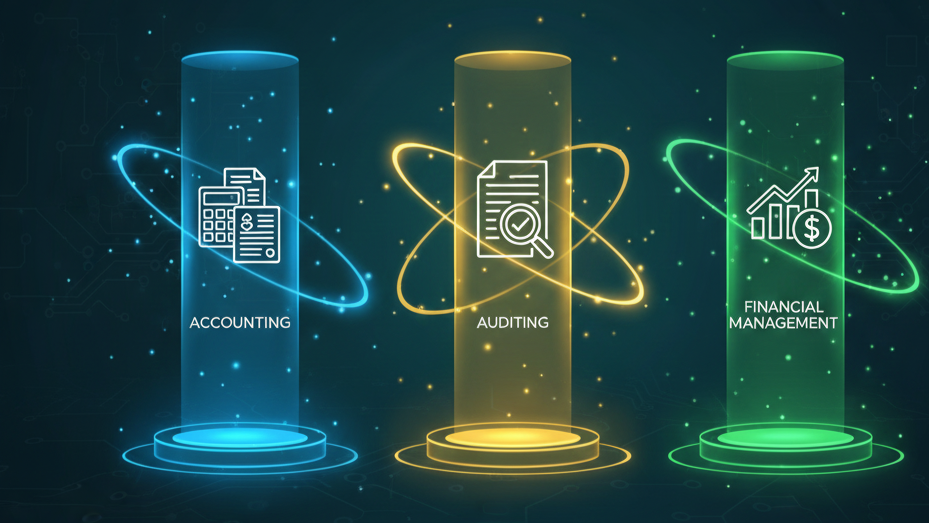
Therefore, let’s review how these three parts meet:
- First, Accounting Gives Money Data.
- Second, Auditing Checks the Data.
- Third, Financial Management Uses the Data to Plan.
In fact, they form a strong control system. This makes the firm stable.
5 Reasons These Financial Functions Are Vital for Growth
- Better Choices: For instance, strong money tools mean choices are based on facts. Not just luck.
- Less Risk: Subsequently, tracking money prevents big debt.
- More Trust: Moreover, checked reports boost trust with investors.
- Less Fraud: Consequently, good rules reduce the chance of scams.
- Faster Growth: Finally, money management ensures growth plans are safe.
Ultimately, this work keeps the firm safe for the future of Accounting Audit Finance.
Final Thoughts
Accounting Audit Finance are vital jobs. They are the base for success. In essence, accounting provides the facts, auditing checks them, and management plans the future. They help firms stay rich and ready. In any event, knowing these jobs gives you a great edge.
Your Turn! 🗣️
Which of the three core functions—Accounting, Auditing, or Financial Management—do you believe is the single most critical pillar for a small business owner, and why?